AI & software product studio /Research → production

JigLoom — AI & software product studio

Weaving intelligence
into digital products.

We are a product studio for teams betting on AI. Research-grade models, production-grade engineering, and interfaces people actually want to open — built by one team, under one roof.

  1. 01 Research
  2. 02 Systems ↗
  3. 03 Product
Inside the studio

The studio

Most software is assembled. We prefer to weave it.

A loom holds two sets of threads under tension — the warp that never moves, and the weft that crosses it. Strategy is our warp. Engineering is our weft. Neither is decoration for the other.

In practice that means a model architect sits next to the designer sketching the empty state, and the person who writes your Terraform has read the same research paper as the one training your classifier. Fewer handoffs, fewer things lost between them.

We take on a small number of engagements at a time. Every one gets a named team, a public roadmap and a codebase you can walk away with at any point.

  • 01

    One team, end to end

    Research, design, build and run — with shared context from discovery through deployment.

  • 02

    Shipping over slideware

    Test the riskiest assumptions with working software. Document the decisions that guide the build.

  • 03

    Yours to keep

    Full IP, documented handover, and the option to hire the team in-house.

Architecture lab

Inside modern
intelligence.

Attention. Routing. Representation.
Open the systems behind the models.

Enter the architecture
A 20-layer causal encoder supplies hidden states to a 20-layer decoder. Cache reuse and sparse indexing reduce repeated work.

Explore the model topology and component notes below.

Architecture study / 01 of 03

DeepSeek-V4.1-Flash

Causal encoder–decoder · CSA2 · DeepSeekMoE

Skip the sequence

01 / Reveal

The assembled system

Attention, routing and expert computation, held in one model.

Public architecture source ↗

Scroll to open the architecture

Architecture studies · schematic geometry · public sources

Architecture notes & sources 3 models + production ↗

DeepSeek-V4.1-Flash

Causal encoder–decoder · CSA2 · DeepSeekMoE

A 20-layer causal encoder supplies hidden states to a 20-layer decoder. Cache reuse and sparse indexing reduce repeated work.

Text + native vision
DeepSeek-ViT features and text embeddings enter Single-Pass mHC. Engram is conditional token memory, not document retrieval.
Causal encoder–decoder
The encoder’s final hidden states supply the decoder’s global KV projections. Each half contains 20 layers.
Sliding-window attention
The first two encoder layers use a local window. Deeper CSA2 layers also combine selected main KV with layer-local SWA KV.
Hierarchical sparse indexer
Full scores all causal positions. Selected blocks form a shared candidate pool. Reindex searches only that pool; Reuse retains the last selected indices.
384 routed · 6 active · 1 shared
A router selects six expert paths per token, while a shared expert contributes alongside them. Weighted outputs recombine.
DSpark
A separately trained semi-autoregressive drafter and confidence-scheduled verification accelerate decoding; this is not an MTP training branch.

Production implication. Cache generation, indexing and expert execution are different costs; design the serving system around each.

Public source ↗
Kimi K3

KDA + gated MLA · Block AttnRes · Stable LatentMoE

A 93-layer hybrid: 69 KDA layers and 24 gated MLA layers. Block Attention Residuals mix representations across depth.

MoonViT-V2 + text
Native visual features are projected into the shared language embedding space.
Kimi Delta Attention
Short convolutions create Q, K and V. Channel-wise retention α and write strength β update a recurrent state; Q reads that state.
Gated multi-head latent attention
A compressed KV representation supplies key/value projections. A separate sigmoid gate modulates the attention output.
Attention across depth
Learned pseudo-queries weight embedding, previous block summaries and the current partial sum. These are depth sources, not token positions.
896 routed · 16 active · 2 shared
Routed experts operate at latent width 3584, with full-width shared paths. RMSNorm and SiTU-GLU stabilize the routed path. Layer 1 uses a dense FFN.

Production implication. Recurrent state, latent KV and depth summaries have distinct lifetimes in a production inference engine.

Public source ↗

Llama 4 Maverick

Native multimodality · early fusion · alternating dense / MoE

Image features and text tokens join one sequence before shared model processing. Dense and sparse expert layers alternate.

Text + image patches
A native vision encoder supplies visual representations alongside embedded text.
Early fusion
Projected image features and text embeddings join one shared sequence before the language backbone.
Alternating dense / MoE
Dense computation alternates with sparse MoE layers. The eight visible layers are a representative excerpt.
128 routed · 1 active · 1 shared
A single routed expert is selected for each token, alongside the shared expert.
Shared multimodal output
One decoder backbone produces an output conditioned on the fused context; there is no separate language encoder tower.

Production implication. Visual preprocessing, shared context and sparse routing belong to one multimodal product pipeline.

Public source ↗

From architecture. To product.

JigLoom · engineered as one system

Model capability becomes useful through context, controls, product design and continuous evaluation.

Data
Validated inputs and governed access.
Foundation model
Select capability for the actual task.
Adaptation
Fine-tune or adapt where appropriate.
Retrieval
Retrieve relevant evidence.
Memory
Retain scoped application state.
Agent logic
Coordinate bounded decisions.
Tools / APIs
Execute authorized actions.
Product interface
Make the system usable.
Inference infrastructure
Serve reliably within a cost budget.
Observability
Trace latency, errors and behavior.
Evaluation
Measure quality before and after changes.
Feedback
Feed reviewed outcomes into improvement.

Production implication. This is an illustrative application architecture, not a claim about a deployed client system.

Generalized application architecture.

Educational studies of publicly documented architectures. JigLoom does not own these models and no partnership or endorsement is implied. Geometry and highlighted routes are conceptual, not tensor-level simulations.

From model to product

Intelligence is useful
when it ships.

We connect research to the work around it: evaluation, infrastructure, interfaces and the feedback that keeps a product improving.

01 / Shape

Turn context into capability.

Data contracts, retrieval and model selection give the system relevant information and clear boundaries.

02 / Prove

Make quality measurable.

Evaluation, latency budgets and failure analysis show what works before it reaches a user.

03 / Ship

Put intelligence in people’s hands.

Interfaces, reliable inference and observability connect the model to a product that keeps improving.

Real use → reviewed feedback → the next iteration

Open the production architecture ↗

Capabilities

Nine disciplines. Fifty-six capabilities. One contract.

Pick a discipline to see everything inside it. Most projects draw on three or four — you brief once and we assemble the squad.

From a fine-tuned classifier to a full agent platform — with the evaluation harness and monitoring that keep it honest after launch.

  • Generative AI & LLM integration — chatbots, copilots, agents
  • Machine learning model development & training
  • Computer vision solutions
  • Natural language processing
  • AI consulting & strategy
  • MLOps — deployment, monitoring, retraining
  • Predictive analytics
  • Recommendation systems
  • Speech recognition & synthesis
  • AI-powered automation (RPA + AI)

Products that survive their own success — typed, tested, observable, and boring in all the right places.

  • Custom software development
  • Web application development
  • Mobile apps — iOS, Android, cross-platform
  • Enterprise software & ERP solutions
  • SaaS product development
  • API development & integration
  • Legacy system modernisation
  • Microservices architecture
  • E-commerce development
  • Game development

Infrastructure written down, reviewed and reproducible — so the third deploy looks exactly like the first.

  • Cloud migration & consulting — AWS, Azure, GCP
  • DevOps & CI/CD implementation
  • Infrastructure as Code
  • Serverless architecture
  • Containerisation — Docker, Kubernetes
  • Cloud cost optimisation

The unglamorous layer every model depends on: clean, governed, arriving on time.

  • Data engineering & pipelines
  • Big data solutions
  • Data warehousing
  • Business intelligence & dashboards
  • Data analytics
  • Database design & administration

Tested before it ships, attacked before someone else does, documented before the audit.

  • QA & software testing — manual and automated
  • Cybersecurity services
  • Penetration testing
  • Compliance consulting — GDPR, HIPAA, SOC 2
  • Code auditing

Interface work that starts at the hardest screen, not the marketing page.

  • UI/UX design
  • Product design consulting
  • Prototyping & wireframing
  • Design systems

The steady hand behind the product — integration, support and people when you need more of them.

  • IT consulting
  • Managed IT services
  • Technical support & helpdesk
  • System integration
  • IT staff augmentation

Where the tooling is young, we bring the engineering discipline that isn't.

  • Blockchain development
  • IoT solutions
  • AR/VR development
  • Edge computing
  • Robotics software

Everything that keeps a product alive after the launch post.

  • Digital transformation consulting
  • Product management as a service
  • Technical documentation
  • Training & upskilling
  • Maintenance & support — SLA based

System studies

Built around
the whole problem.

Engineering capabilities explored through distinct interface concepts. These are capability studies, not client case studies or measured outcomes.

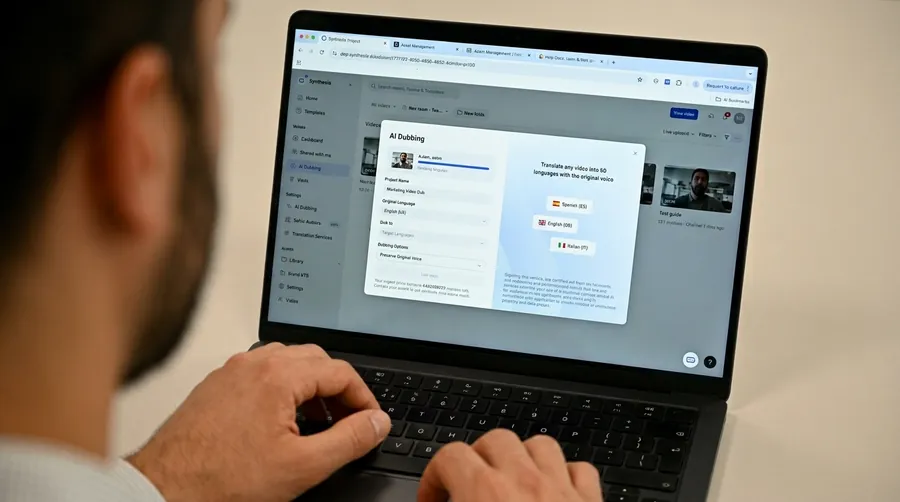
AI dubbing workspace concept for translating and reviewing media

01 / AUDIO · LANGUAGE · REVIEW

Multimodal media workspace

Connect audio and language models to a workspace for preparing, translating and reviewing media.

Transcription → translation → human review

Discuss a system like this ↗
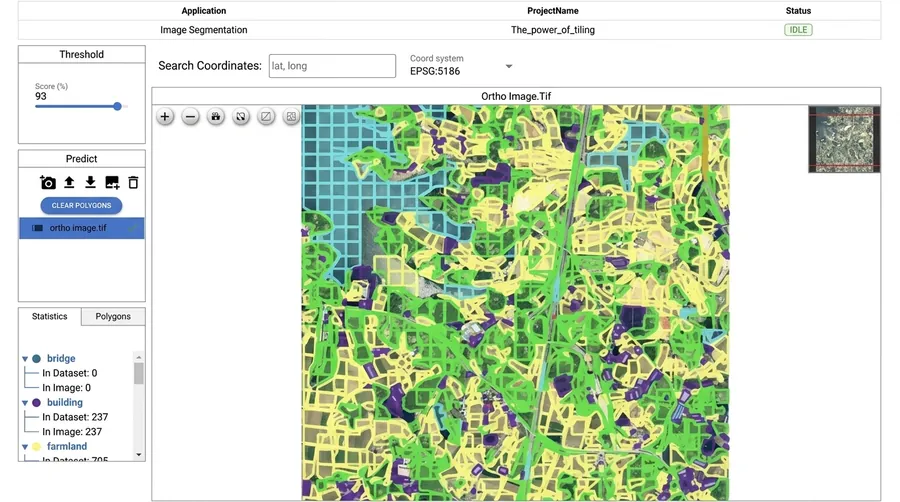
Vision platform concept showing image segmentation and a map workspace

02 / CAMERA · MODEL · DEVICE

Edge vision platform

Move visual inference closer to the camera, with a model budget that fits the device and a useful interface for reviewing results.

Capture → inference → reviewed events

Discuss a system like this ↗
Workflow editor concept connecting AI analysis to records, notifications and draft emails

03 / REASONING · TOOLS · CONTROL

Agentic workflow system

Turn an incoming request into bounded tool actions, with approval points, recoverable failures and a record of what happened.

Intent → authorized actions → audit trail

Discuss a system like this ↗
Analytics product concept with charts and a structured reporting interface

04 / DATA · EVALUATION · FEEDBACK

Decision intelligence workspace

Bring operational data and model behavior into one product, so teams can understand results and decide what to improve next.

Signals → evaluation → informed decisions

Discuss a system like this ↗

Selected explorations

Product and system explorations.

Interface concepts across AI, data and software. These visuals illustrate product directions, not verified client case studies.

Seven concept studies

Study 01

Cross-platform product suite

Consistent navigation and components across different device sizes.

React Native · Design system · 3 platforms

Social wellbeing app shown across three phone screens

Study 02

Wellbeing companion

Daily tasks, personal progress and community in one connected interface.

On-device ML · iOS & Android

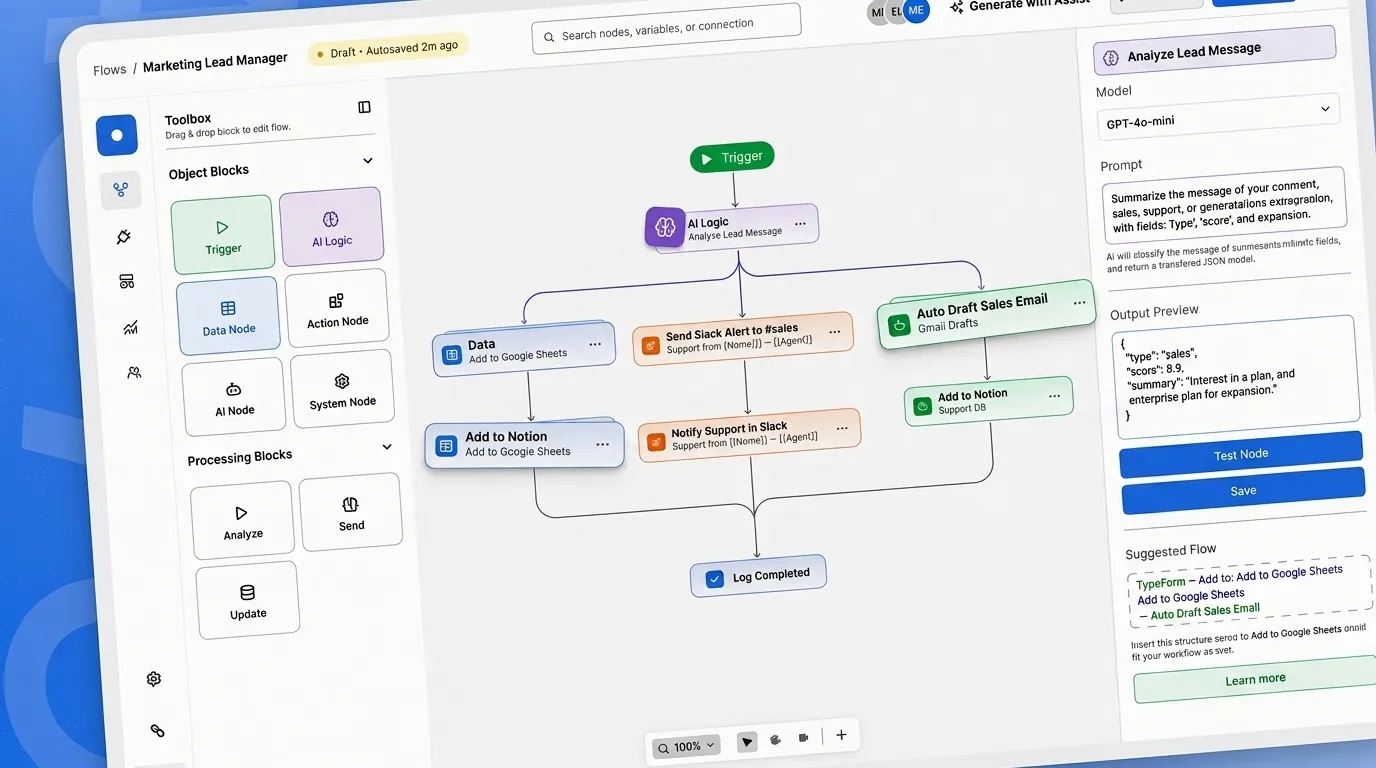
Workflow editor concept connecting a trigger, AI logic and tool actions

Study 03

Agent orchestration canvas

A visual path from incoming message to analysis, tools and action.

LLM tooling · Node graph · Streaming

Workflow description

A trigger passes a lead message to AI analysis. Three branches update records, notify a team in Slack and draft a sales email. The branches finish at a shared completion log.

Generative advertising studio interface

Study 04

Generative ad studio

A shared workspace for creative generation, review and brand control.

Diffusion pipeline · Brand guardrails

Field analytics dashboard with satellite imagery segmentation

Study 05

Field intelligence platform

Satellite imagery and segmentation brought into an operational view.

Segmentation · Geospatial · Edge sync

Real-time trading and observability dashboard

Study 06

Real-time risk console

Dense, changing data arranged for monitoring and investigation.

Streaming data · Sub-second refresh

Playful 3D modelling app for children

Study 07

3D modelling for kids

An approachable way to explore objects, prompts and spatial creation.

WebGL · Text-to-mesh · Safety layer

Interface studies

The system meets
the person.

A closer look at interaction, composition and product character. Supplied visual concepts, presented as design studies.

Video editor concept with a preview, text tools and a timeline.
01

Creative editing

A timeline, a preview and the tools that connect them.

Loops mobile interface showing learning topics and daily progress.
02

Learning, in a loop

Small learning sessions with a clear sense of progress.

Lapdata identity study, a mobile data workspace and a botanical code motif.
03

Data with a human interface

A visual identity carried through a data workspace.

TheBrief editor concept with a canvas, shape controls and an asset menu.
04

A creative workspace

Composition tools placed directly beside the work.

In the hand

Interfaces built for thumbs, not for screenshots.

Mobile product concepts with shared interaction patterns. Device testing, readable interfaces and accessible controls guide implementation.

Community feed
Task scheduling

How we work

Five passes of the shuttle.

The same rhythm on a six-week prototype and a two-year platform. Only the width of the cloth changes.

  1. 01

    Loom Sprint

    Two paid weeks. We interview your users, read your data, prototype the risky part, and hand back an architecture sketch with a fixed build estimate. You keep it either way.

    Output — build plan, estimate, prototype

  2. 02

    Warp

    The fixed threads go on first: data contracts, environments, CI, evaluation harness, design tokens. Unglamorous, and the reason month four doesn't hurt.

    Output — foundations, pipelines, design system

  3. 03

    Weft

    Two-week cycles, each ending in something you can open. Design and engineering move together — no design debt handed forward, no tickets describing screens nobody drew.

    Output — shippable increments, demo every fortnight

  4. 04

    Tension test

    Load, adversarial and accessibility testing. Models get an offline eval set and an online guardrail. Security review before the launch date, not after it.

    Output — audit report, benchmarks, sign-off

  5. 05

    Hand over the loom

    Runbooks, architecture decision records, and a fortnight of pairing with your team. Then SLA support, or a clean goodbye — both are a fine outcome.

    Output — documentation, training, SLA

Why teams pick us

Engineering principles, from the first sprint.

Research to runtime

Papers we can read, systems we can run.

The team that benchmarks the model also owns the pager. Nothing gets thrown over a wall because there isn't one.

Fixed discovery

You know the number before we start.

Every build opens with a fixed-price sprint that ends in a real estimate — not a range with a shrug attached.

Engineering ownership

Review the decisions that matter.

Architecture reviews, paired implementation and controlled production access keep engineering decisions accountable.

Overlap hours

A working rhythm you can rely on.

We agree communication windows, review points and escalation paths at kickoff, with decisions documented for the whole team.

Cost discipline

We watch the cloud bill like it's ours.

Budgets and alerts belong in the architecture. We measure steady-state costs, review capacity and identify waste before handover.

Exit ready

Built so you can leave us.

Standard stacks, documented decisions, no proprietary glue. The best compliment is a client who takes it in-house.

Working stack — chosen per project, never by default

Models
PyTorch · TensorFlow · LangGraph · Hugging Face · ONNX · Ray · vLLM · Triton
Software
TypeScript · React · Next.js · Swift · Kotlin · Go · Rust · Python
Infrastructure
AWS · GCP · Azure · Kubernetes · Terraform · Postgres · ClickHouse · Kafka

Domains we build for

Different domains. Specific engineering constraints.

We scope each system around its users, data and operating constraints. Regulatory and domain requirements are established during discovery.

  • Fintech

    Payments, risk scoring, KYC automation, regulated reporting.

  • Health & care

    Triage assistants, imaging support tools, HIPAA-shaped data flows.

  • Retail & commerce

    Recommendations, catalogue enrichment, storefronts that survive launch day.

  • Industry & energy

    Defect detection, predictive maintenance, edge inference on the line.

  • Media & creative

    Generative production tools, rights-aware asset pipelines.

  • Logistics

    Routing, demand forecasting, fleet telemetry at scale.

  • Education

    Adaptive learning, assessment tooling, child-safe interfaces.

  • Public sector

    Accessibility-first services, procurement-ready documentation.

Before you write

The questions we get asked first.

Anything not covered here — put it in the brief. An engineer will review your brief.

Every engagement opens with a paid two-week Loom Sprint. We map the problem, pressure-test feasibility on the riskiest piece, and hand back a build plan, architecture sketch and fixed estimate. You own the output whether or not we continue.

Both. Discovery and clearly-bounded builds run fixed-price. Longer product work runs as a dedicated squad billed monthly, which keeps scope flexible without renegotiating every change request.

You do — source, weights, prompts, pipelines and infrastructure definitions. Repositories, runbooks and architecture decision records are handed over at every milestone, not only at the end.

Yes. We start with a two-week audit covering architecture, test coverage, dependency risk and cloud spend, then agree a stabilise-then-extend plan before touching production.

We design for the regime you operate under — GDPR, HIPAA or SOC 2 — with residency, retention and access decided at architecture time rather than patched later. Models can run in your own cloud account or fully on-premise.

SLA-backed support with named engineers, monitoring and retraining schedules for anything model-driven, and a quarterly roadmap review. Or we train your in-house team and hand the loom over entirely.

Request a project

Tell us what you're trying to build.

Two minutes of your time gets you a reply from an engineer, not a sales sequence. If we're the wrong studio for it, we'll say so and point you somewhere better.

  • Reviewed by an engineer
  • NDA on request, before you share anything
  • No obligation, no drip campaign

01 Your details

02 Project context

What do you need? Pick any

Budget USD
Timeline

03 Your brief

We use your details to respond to this enquiry. How we handle your information.

Prefer email? contact@jigloom.com — hiring: hr@jigloom.com

Careers at JigLoom

Build things
that matter.

Research, engineering and product design, working together.

OPEN POSITIONS / 00We don’t have any open positions right now. Future opportunities will appear here.

For hiring enquiries: hr@jigloom.com

JigLoom / Project enquiry
JigLoom / Careers